
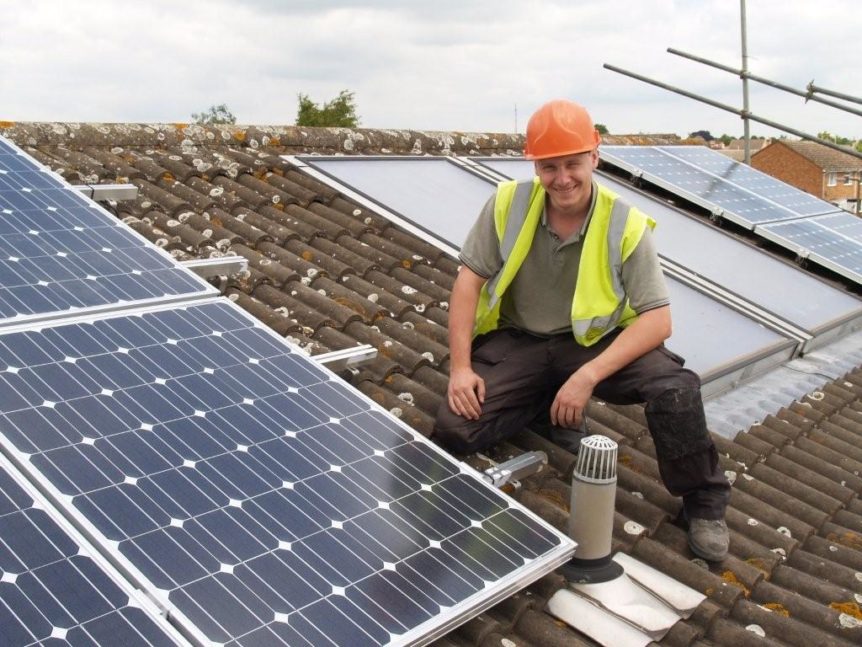
What a Professional Solar PV Installer Actually Does (And Why It Matters)
Most homeowners researching solar energy focus on panels, installation costs, and electricity generation. Far fewer think carefully about who actually installs the system. Yet the quality of installation determines long-term performance, electrical safety, compliance with building regulations, and eligibility for the Smart Export Guarantee.
A professional solar PV installer does far more than mount panels on a roof. They manage a regulated, multi-stage process covering site survey, system design, planning checks, DNO applications, electrical installation, commissioning, and monitoring setup. At Tethys Energy, we’ve delivered fully managed solar installations across Reading, Wokingham, and Berkshire for over 10 years, with in-house expertise spanning nearly 20 years. Here’s what that process involves and why every stage matters.
Key Takeaways
- A professional solar PV installer manages everything from site survey and system design through to MCS registration and monitoring setup.
- MCS certification is a legal requirement for the Smart Export Guarantee, only MCS certified installers can issue the certificate you need to register.
- DNO applications, DC circuit work, and electrical safety testing all require specialist qualifications that an unqualified person cannot provide.
- DIY or non-MCS installation can void manufacturer warranties, invalidate home insurance, and eliminate SEG eligibility permanently.
- Tethys Energy has been delivering solar PV installations across Reading, Wokingham, and Berkshire for over 10 years, with in-house expertise spanning nearly 20 years.
What Does a Solar PV Installer Do?
A professional solar PV installer is a qualified specialist managing the complete process of designing, installing, and commissioning a solar photovoltaic system, from initial survey through to DNO notification, safety testing, MCS registration, and monitoring setup.
Solar PV installation is regulated in the UK. These systems involve high-voltage AC and DC electrical circuits, structural roof work, national grid connection, and certification obligations under building regulations. Professional installers hold qualifications including NVQ Level 3 in electrical installation, 18th Edition wiring regulations, Level 3 Award in Solar PV installation, and company-level MCS certification.
The Microgeneration Certification Scheme (MCS) isn’t just a quality mark; it’s a regulatory requirement for Smart Export Guarantee eligibility. Without it, homeowners cannot register for SEG payments regardless of system performance.
Stage One: Site Survey and System Design
The site survey forms the foundation of a well-performing system. During our visit to your Reading, Wokingham, or Berkshire property, we assess roof orientation and pitch, analyse shading from trees, chimneys, and neighbouring buildings, evaluate roof structure and covering integrity, and review your household energy needs based on recent electricity bills.
We use specialist software to model expected annual generation based on your property’s exact conditions. This generation forecast provides an accurate picture of energy production and savings before commitment, something DIY installations rarely include.
We design each system around your actual energy needs rather than offering one-size-fits-all solutions. Where battery storage is considered, we factor this in from the outset. For properties in conservation areas or listed buildings, we check whether planning permission is required, using our local knowledge of Reading Borough Council, Wokingham Borough Council, and West Berkshire Council requirements.
Stage Two: DNO Applications and Approvals
Every grid-tied solar PV system requires notification to or approval from the local Distribution Network Operator before grid connection. Professional installers handle this entirely on your behalf.
Systems up to 3.68kWp per phase fall under G98 regulations, requiring post-installation notification. Larger systems fall under G99, requiring formal DNO approval before installation begins, a process taking several weeks. Following approval, you receive the export MPAN number needed for Smart Export Guarantee registration.
We manage all DNO applications as standard, keeping you informed throughout and handling any queries. This hassle-free approach means you don’t need to become an expert in grid regulations to benefit from solar energy.
Stage Three: Solar Panel Installation and System Setup

Installation day typically completes within one to two days for standard residential systems. Our in-house installation teams coordinate every aspect for safe, efficient completion.
We fix racking systems to structural rafters and weatherproof all roof penetrations before mounting photovoltaic panels. DC cabling routes from panels to the inverter location, typically the loft or utility room. DC circuits can reach 600V or more, making this specialised electrical work requiring specific solar PV training.
The solar inverter converts DC output into usable AC electricity connected to your consumer unit. We use string inverters for standard systems or hybrid inverters where battery storage integrates from the outset.
Our installers are directly employed by Tethys Energy; we never use subcontractors. This ensures consistent quality and the high standards our Berkshire customers expect.
Stage Four: Commissioning and Testing
Commissioning verifies your solar system is safe and performing as expected, producing documentation needed for financial incentives and providing peace of mind.
We carry out full testing in accordance with BS 7671 IET Wiring Regulations, including insulation resistance testing, polarity checks, earth fault loop impedance testing, and inverter protection verification. Every result is recorded in your Electrical Installation Certificate.
We configure the inverter to optimise self-consumption and export behaviour, commission battery storage energy management settings, and confirm the system reaches expected peak output. Every customer receives complete documentation: Electrical Installation Certificate, inverter commissioning report, manufacturer warranties, insurance-backed guarantee, and the MCS certificate required for Smart Export Guarantee registration.
Stage Five: Monitoring Setup and Ongoing Performance
Professional installation doesn’t end when we leave your property. We configure the inverter monitoring app and walk you through its use, ensuring you can track performance and understand your savings.
Key metrics include daily and annual generation, actual output versus forecast, self-consumption versus exported electricity, and any inverter fault codes. Monitoring helps catch faults early before they significantly affect generation. We remain your point of contact if output drops below expectations.
Why Professional Installation Matters
Every stage of a professional solar PV installation directly affects safety, compliance, financial return, and long-term energy production. Cutting corners at any point creates risks that last the full lifetime of the system, and can cost far more to resolve than any initial saving on installation costs.
Safety, Compliance, and Insurance
DC circuits at 600V remain live in daylight even after AC isolation. Incorrect wiring, inadequate overcurrent protection, or poor junction box connections create fire risks that can develop over years. Only MCS certified installers can issue the MCS certificate required for SEG registration, without it, the ability to sell electricity back to the grid and earn from the export tariff is permanently lost. Home insurers may refuse claims caused by a non-professional installation, and most manufacturers void their warranty if the system was not installed by an approved electrician with the appropriate MCS certification.
Performance and Documentation
Accurate generation forecasting, correct cable sizing, and properly configured inverter settings deliver meaningfully better annual energy production than a poorly designed system, a difference that compounds over a 25-year system life and translates into greater savings on electricity bills and higher income from the export tariff. The complete documentation set, including the Electrical Installation Certificate, MCS certificate, DNO approval, export MPAN, and manufacturer warranties, is required for SEG registration, may be requested during remortgaging or property sale, and supports property value with buyers who understand the benefits of a compliant solar installation.
Why Choose Tethys Energy as Your Solar PV Installer?

Tethys Energy is an MCS certified solar PV installer and renewable energy company with over 10 years of experience across Reading, Wokingham, and Berkshire, and in-house expertise spanning nearly 20 years. We use our own fully qualified installation teams with no subcontract labour, and we manage every stage of the solar installation process from initial consultation to long-term monitoring and aftercare.
We do not focus on a single product range. We design bespoke solar panel systems around each property’s roof space, orientation, energy needs, and budget, and our expertise spans battery storage, Tesla Powerwalls, heat pumps, EV chargers as part of a package, and other renewable technologies for homeowners planning a full home energy transition. We are committed to excellent customer service throughout every installation, and our customer satisfaction levels across Google and Which Trusted Traders reflect that.
Our sustainable energy solutions are designed to give homeowners genuine energy independence, generating their own electricity, saving money on energy bills, and reducing their carbon footprint for years to come. Contact us today for a free initial consultation and site survey to find out what solar can genuinely deliver for your home.
Choose Professional Installation for Long-Term Success
A professional solar PV installer surveys the site, forecasts annual generation, designs the solar panel system to match energy needs and roof space, checks permitted development rights, manages DNO applications, completes the electrical installation to BS 7671 standards, commissions and tests the system, registers it with the Microgeneration Certification Scheme, and sets up monitoring so the system’s performance can be tracked over its lifetime.
Every part of that process requires electrical qualification, solar PV training, and MCS certification. Shortcuts carry lasting consequences for safety, compliance, export tariff income, insurance cover, manufacturer warranties, and energy production. Choose an installer with MCS certification, a thorough site survey, a clear generation forecast, and a complete documentation pack on completion. Contact Tethys Energy today for a free site survey and start reducing your electricity bills with a professionally installed solar PV system.