

Do I Need Planning Permission for Solar Panels? UK Rules and Exemptions
Thinking about installing solar panels on your property? Most homeowners in Reading and Berkshire are pleased to discover that planning permission is rarely required. Thanks to permitted development rights, the majority of solar installations can proceed without formal planning approval. However, specific criteria apply, especially for listed buildings and properties in conservation areas.
Key Takeaways
- Most solar panel installations in the UK qualify as permitted development, exempting them from planning permission.
- Roof-mounted panels must not protrude more than 200mm from the roof slope to avoid planning permission.
- Special permissions are required for listed buildings and properties in conservation areas.
- Ground-mounted panels must be at least 5 meters from property boundaries to comply with rules.
- Consulting local planning authorities is necessary for unique property types to ensure compliance.
What Is Planning Permission for Solar Panels?
In the UK, most solar panel installations fall under “permitted development rights,” meaning formal planning permission typically isn’t needed. Your local planning authority only needs to be involved in specific circumstances where standard exemptions don’t apply.
Planning permission is a set of approvals ensuring installations comply with building and safety regulations. While building regulations focus on structural safety, permitted development rights simplify the approval process for standard installations.
Understanding Planning Permission Requirements
Understanding planning permission for solar panels is vital for anyone considering their installation in the UK.
Planning permission for solar involves a set of approvals that need to be followed, though most installations fall under “permitted development.” This means they’re typically exempt from requiring formal solar panel planning permission.
It’s important to know when we need to involve the local planning authority, as they play a key role in the approval process. The local authority guarantees that installations comply with specific guidelines.
While many cases don’t require planning permission for solar, understanding the rules helps avoid potential issues.
Permitted Development Rules: When Solar Panels Don’t Need Planning Permission

Let’s explore when we don’t need planning permission for solar panels under permitted development rules.
Roof-mounted installations must meet specific criteria, such as not protruding more than 200mm from the roof slope.
Similarly, wall and ground-mounted panels have their own set of requirements to guarantee they qualify as permitted developments without impacting the property’s visual appeal.
Permitted Development Criteria for Roof-Mounted Solar Panels
When installing roof-mounted solar panels, it’s vital to understand the permitted development criteria that allow you to bypass the need for planning permission.
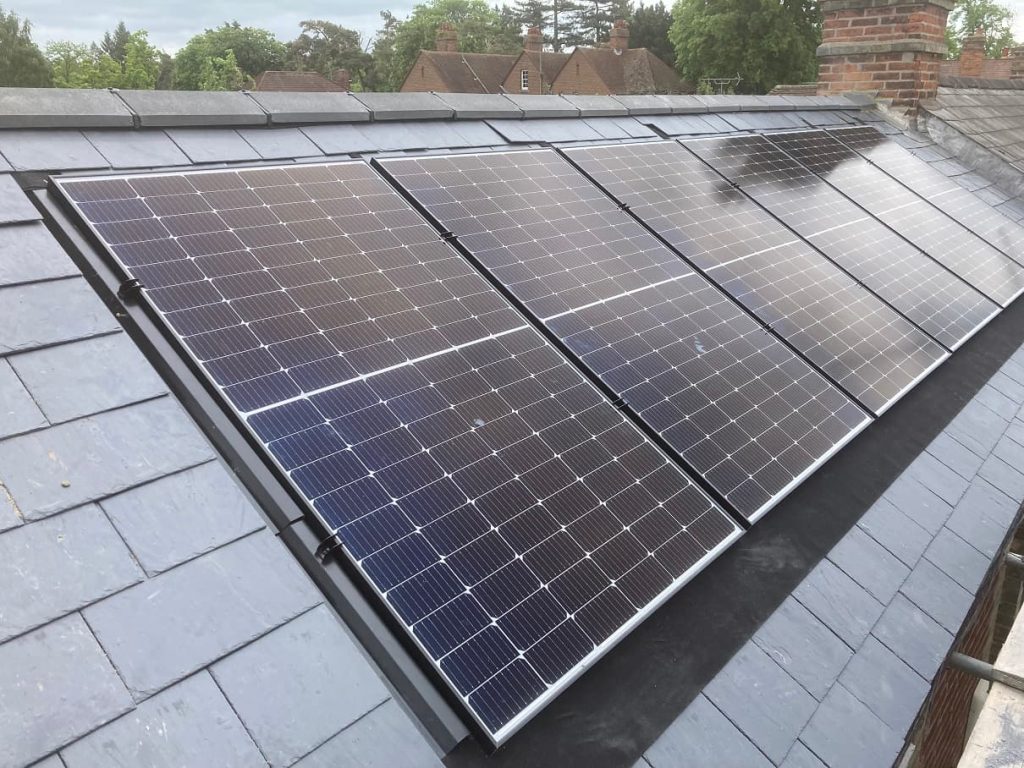
The permitted development rules specify that panels mustn’t protrude more than 200mm from the roof surface and shouldn’t extend higher than the roof’s highest part, excluding the chimney.
For flat roof installations, specific rules apply, ensuring minimal visual impact.
During the installation process, it’s important to comply with these development rules to avoid needing planning permission for solar panels.
Panels must be sited away from boundaries and external appearances, maintaining a practical and compliant approach.
Requirements for Wall-Mounted Solar Panel Installations
To install wall-mounted solar panels without planning permission, it’s crucial to adhere to permitted development criteria.
We must guarantee our installation meets specific requirements to avoid needing approval.
Consider these key factors:
- Wall mounting: Panels should be installed on elevation walls, ensuring they fit within the building’s structure.
- Protrusion limits: Panels shouldn’t protrude more than 20cm from the wall surface to maintain compliance.
- Height restrictions: The highest point of the solar panels mustn’t exceed the top of the building’s roofline.
- Visual impact: Panels should minimize visual impact on neighboring properties and the surrounding area.
Following these guidelines helps maintain compliant and efficient installations.
Ground-Mounted Solar Panels: What You Need to Know
Ground-mounted solar panels offer a practical solution for those wanting to harness solar energy without affixing panels to their rooftops.
These installations often fall under permitted development rules, meaning planning permission isn’t required. However, there are specific guidelines to follow.
The installation of solar panels must be beyond 5 meters from the boundary of property, not exceed height restrictions of 4 meters, and shouldn’t be placed on land forward of the principal elevation facing a highway.
Adhering to these rules guarantees compliance and simplifies the process, allowing us to enjoy the benefits of solar power seamlessly and efficiently.
When Do Solar Panels Require Planning Permission?
Let’s explore when solar panels require planning permission.
If we’re dealing with listed buildings or properties in conservation areas, there are specific requirements to take into account.
Additionally, flat roof installations and certain property types may need prior approval, ensuring we follow the necessary guidelines.
Special Property Types and Restrictions
Understanding the nuances of planning permission for solar panels is critical, especially when dealing with unique property types and restrictions.
Some properties do require planning permission due to specific conditions. Here are key scenarios where permission for solar panels is necessary:
- Listed buildings: Special consent is needed due to historical significance.
- Conservation areas additional requirements: Extra guidelines apply to preserve aesthetic integrity.
- Management company approval requirements: Flats, leaseholds, and properties with covenants may need approval.
- Protrusion and visibility: Panels extending beyond 200mm from the roof or visible from highways in certain areas might require planning permission for solar installations.
Understanding these can guide us in compliance.
How to Check If You Need Planning Permission: Step-by-Step Guide

Let’s walk through the steps to determine if planning permission is needed for your solar panel installation.
First, we’ll assess your property and location to understand any specific restrictions that might apply.
Then, we’ll evaluate your proposed installation and verify if it complies with permitted development rules, using real-world examples to clarify when permission is required.
Step 1: Assess Your Property and Location
Before diving into solar panel installations, it’s crucial to assess your property and location to determine if planning permission is necessary.
Let’s identify some key factors:
- Private House or Flat: Determine if your property is a private house or a flat/apartment, as planning rules can differ.
- Listed Building Status: Check if your property has a listed building status, which might restrict modifications.
- Conservation Area: Verify if you’re in a conservation area, as stricter regulations may apply.
- Designated Areas and Proximity: Consider world heritage sites or scheduled monuments nearby, which might influence planning permission requirements.
Understanding these factors aids compliance and smooth installation.
Step 2: Evaluate Your Proposed Installation
When evaluating your proposed solar panel installation, start by determining the type of installation you plan to undertake.
Are you considering roof-mounted panels on a pitched or flat roof, wall mounted systems, or even ground-mounted options? Each type has its own considerations for planning permission and might fall under permitted development.
For instance, the roof slope can impact your choice, as it affects both installation and efficiency.
Understanding these factors will help you navigate the planning permission process more effectively.
Let’s guarantee our solar panel installation aligns with regulations and maximizes our home’s energy potential without unnecessary hurdles.
Step 3: Verify Compliance with Permitted Development Rules
Although installing solar panels can be a straightforward process, it’s crucial to verify compliance with permitted development rules to avoid potential legal issues.
We can confirm our solar panels don’t require additional permission to install solar by checking a few key criteria:
- Measure protrusion: Verify the panels don’t protrude excessively from the roof or wall surface.
- Height calculation: Confirm the installation isn’t higher than the highest part of the roof.
- Boundary distance: Make sure the panels are an appropriate distance from property boundaries.
- Visual impact: Consider the external appearance and visual impact, especially if they’re ground mounted or visible from highways.
Real-World Examples: Permission Required or Not?
Ever wondered if you need planning permission for your solar panel installation? Let’s explore some real-world examples.
For a standard private house with a pitched roof, planning permission typically isn’t needed due to permitted development rights. However, if your proposed installation is on a listed building in a conservation area, you’ll need listed building consent.
A flat roof in such areas requires prior approval. Meanwhile, ground-mounted panels in your garden are usually permitted if they’re more than 5 meters from the boundary.
Always check building regulations to verify your installation complies with all necessary requirements. Stay informed and proactive!
The Planning Application Process: When Permission Is Required
When we need to apply for planning permission to install solar panels, understanding the application process is essential.
We’ll navigate the steps to submit a planning application, knowing what documents to prepare and what to expect regarding review timelines.
How to Apply for Planning Permission
Before you commence a solar panel installation, it’s crucial to understand when planning permission is necessary.
If you need to apply for planning permission for solar panels, follow these steps to guarantee a smooth process:
- Submit a planning application to your local planning authority, including all required documentation and drawings.
- Detail the proposed installation, considering visual impact and external appearance.
- Assess the amenity of the area, especially if it’s within a heritage or conservation area.
- Obtain approval from your management company if your property is leasehold.
What to Expect from the Application Process
First, you’ll need to apply for planning permission by submitting a planning application to our local authority. This includes detailed drawings and proposed installation specifics.
A visual impact assessment evaluates how the panels affect the property’s appearance and the amenity of the area. Our local authority reviews this, considering amenity aspects and aesthetic impacts.
Processing times can vary, but working with experienced installers like Tethys Energy can streamline the process, improving our chances of gaining permission to install solar panels.
Benefits of Understanding Planning Permission Requirements
Having a solid grasp of planning permission requirements for solar panel installations is essential for ensuring a seamless and legally compliant process.
Understanding these requirements helps us:
- Avoid unnecessary delays in the installation process by knowing when our project qualifies as permitted development.
- Prevent non-compliant installations that might need costly removal if not approved by the local planning authority.
- Maximize the value of our solar investment by securing development rights and adhering to regulations.
- Build a good relationship with the local planning authority, reducing red tape and encouraging more homeowners to install solar panels successfully.
Why Choose Tethys Energy for Solar Panel Installation and Planning Guidance
With over 10 years installing solar PV and battery storage systems across Reading, Wokingham, and Berkshire—backed by nearly 20 years of in-house experience—we understand local planning requirements inside and out.
Our Approach
- Expert local guidance: Navigate Reading and Berkshire planning regulations seamlessly
- MCS-certified installations: Full compliance with UK building regulations guaranteed
- In-house installation teams: No subcontractors, just highly trained professionals
- Hassle-free process: We handle the technical details so you don’t have to
Getting Started: Your Solar Panel Planning Journey
Most of our installations in the Reading and Wokingham areas proceed smoothly under permitted development rights. During your initial consultation, we assess your property’s specific circumstances and advise on any permissions needed.
Conclusion: Install Solar Panels with Confidence in UK Planning Rules
Understanding UK planning rules empowers you to move forward with solar energy confidently. Most residential solar installations don’t require planning permission, making the transition to renewable energy straightforward for Reading and Berkshire homeowners.
Ready to explore solar for your property? Contact Tethys Energy today for expert advice on your solar installation. We’ll assess your property, clarify any planning requirements, and design a bespoke solar solution tailored to your home and energy needs.