

How Many Solar Panels Do I Need? A Sizing Guide for UK Homes
When considering solar panels for your UK home, it’s important to first understand how many you actually need. It’s not just about slapping panels on the roof and hoping for the best. Instead, it involves factors including energy consumption, panel efficiency, and roof orientation. By exploring these details, you can determine the right number of panels to power your home efficiently.
Key Takeaways
- To determine your solar panel needs, use recent energy bills to calculate your annual electricity consumption
- Assess the available roof space and orientation to optimise solar panel placement and efficiency
- When planning the system size, remember to consider future energy needs, such as heat pumps or electric vehicles
- Evaluate solar panel efficiency, as it impacts the number of panels required to meet your energy needs
- Contact Tethys Energy for a professional assessment to ensure precise solar panel sizing for your home
What Determines How Many Solar Panels You Need?
When determining how many solar panels you need, several factors come into play, making a one-size-fits-all approach unsuitable. It’s important to consider your energy consumption, the available roof space, and the efficiency of the solar panels themselves.
By understanding these aspects, you can guarantee your solar panel system is tailored to meet your unique electricity needs.
Key Factors Influencing Solar Panel Requirements
Determining how many solar panels you need involves several key factors that will inform the ideal system for your home. First, it’s important to assess your energy consumption to understand your household’s electricity needs.
Next, roof space plays a critical role, as it limits how many panels can be installed. Solar panel efficiency also affects how effectively they convert sunlight into energy. Sunlight hours, particularly in the UK, influence energy production throughout the year.
By considering these elements together, you can guarantee that your solar panel system will meet your current needs as well as planning effectively for your future energy requirements.
Understanding Your Energy Consumption: The Starting Point

Before you decide how many solar panels you need, it’s essential to calculate your annual electricity consumption. By reviewing your electricity bills, you can calculate your usage in kilowatt-hours (kWh), and compare it to average UK household figures.
In planning for your future energy needs, include potential additions such as heat pumps or electric vehicles, as comprehending these patterns will help to determine the right system size for you.
How to Calculate Your Annual Electricity Consumption
When planning a solar panel system, understanding your annual electricity consumption is crucial. By examining your energy bills, you can determine your annual electricity usage and gain insight into your household energy consumption patterns.
Look for the total kilowatt hours (kWh) used over a year, typically found on utility bills. This information helps you to estimate your daily energy consumption, allowing you to size your solar panel system accurately.
If your electricity consumption is high, you’ll need a larger system. Conversely, lower usage means fewer panels. Understanding your needs guarantees you can optimise your investment in solar energy.
Average Energy Usage for UK Homes
Understanding your energy consumption is the starting point for planning an efficient solar panel system for your home. Knowing your annual electricity consumption helps to determine the system size you need.
On average, UK household energy consumption figures reveal that a typical household uses around 4,750 kWh annually. Bear in mind, though, that each household is unique, so reviewing your annual electricity consumption and recognising seasonal variations is vital.
Solar Panel Output and Efficiency: How Much Energy Each Panel Produces
Next, let’s explore how much electricity each solar panel produces and what affects this output. We’ll compare the efficiency of different types of panels—monocrystalline, polycrystalline, and thin film—to see which best suits your needs.
How Much Electricity Does Each Solar Panel Produce?
Have you ever wondered just how much electricity a single solar panel can produce? Let’s explore the details of solar panel output. Typically, in the UK, solar panels produce around 400W to 500W, with some high-capacity models producing over 600W. However, it’s important to note that higher capacity solar panels take up more space, which means you may achieve a higher overall output from having more smaller panels than by having a few high-output ones.
Here are the key factors affecting solar panel output:
- Monocrystalline solar panels: Known for their high efficiency (18-24%), they yield more energy
- Polycrystalline panels: Slightly less efficient (15-18%), but still effective
- Each panel’s annual energy production is measured in kilowatt hours
- Usable electricity varies with factors including sunlight and roof orientation
Understanding these factors helps to determine how much electricity you can harness, and whether multiple smaller panels or fewer larger panels will work best for your available roof space.
Comparing Solar Panel Efficiency: Monocrystalline vs. Polycrystalline vs. Thin Film
Understanding solar panel efficiency is key to determining how much energy each type produces. Monocrystalline solar panels boast the highest efficiency, ranging from 18-24%, translating to greater solar panel output per panel. This means fewer panels are needed to achieve the same energy production.
Polycrystalline panels offer a slightly lower efficiency of 15-18%, while thin film solar panels, though flexible, have the lowest efficiency. Despite this, they can still contribute meaningfully to your energy needs.
Each type’s efficiency impacts how much electricity a solar panel produces annually, measured in kilowatt hours. When selecting panels, consider that higher wattage models require more roof space, so the optimal choice depends on balancing your available space with your energy goals.
Calculating How Many Solar Panels You Need: Step-by-Step Guide
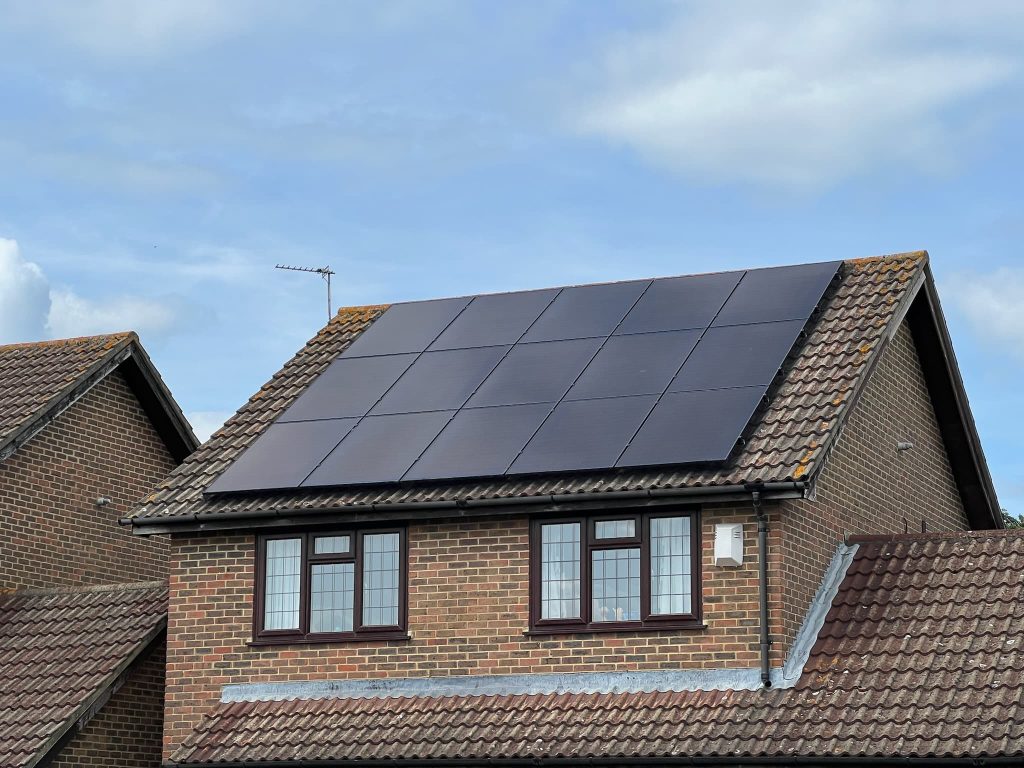
Let’s start by evaluating your annual electricity consumption, as this will be the foundation for our calculations. Next, we’ll consider the output and efficiency of the solar panels to understand how much each one can contribute to your energy needs. Finally, we’ll factor in the typical UK sunlight hours and roof conditions to determine the number of panels required for your home.
Step 1: Assess Your Annual Electricity Consumption
To determine how many solar panels you’ll need, start by evaluating your annual electricity consumption. This step is essential in determining how many solar panels you’ll need for your home. Here’s how you to calculate it:
- Review your annual electricity usage from your bills: This gives a clear picture of your energy needs
- Calculate in kilowatt hours (kWh): Energy consumption is typically measured in kWh
- Understand the solar panels needed for your specific usage: This helps answer the question, “How many solar panels do I need?”
- Consider variations in energy use: Seasonal changes can influence your annual consumption
With this information, we can accurately determine the panels you need.
Step 2: Calculate Based on Panel Output and Efficiency
Once we have an understanding of your annual electricity consumption, the next step involves examining the output and efficiency of the solar panels themselves.
Choose a panel type with an appropriate efficiency rating to guarantee you’re making the most of the available space. To calculate how many solar panels you need, consider what each solar panel produces and factor in higher efficiency models if space is limited.
Remember that while higher wattage panels (500-600W+) produce more power per panel, they also require more roof space. In some cases, installing more lower-wattage panels may yield better overall system output for your available roof area.
Step 3: Factor in UK Sunlight and Roof Conditions
As well as evaluating the number of solar panels you’ll need, it’s also essential to factor in the specific sunlight conditions of the UK. Based on these conditions, we can accurately calculate how many solar panels are necessary. Here’s what we need to assess:
- Peak sunlight hours: Understand the realistic expectations for your location
- Production ratio: Evaluate this for typical UK conditions
- Roof size: Determine the available space for installation
- Annual consumption formula: Use this calculation: Annual consumption ÷ (Panel output × Average sunlight hours × 365)
Roof Space Requirements and Installation Considerations
Let’s consider how much roof space will be needed to install solar panels effectively. Typically, each panel covers approximately 1.6 to 2 square metres and the available roof space will determine the maximum system size. We’ll also optimise panel placement by considering such factors as roof orientation and tilt to guarantee maximum energy output.
How Much Roof Space Do Solar Panels Need?
Understanding how much roof space is needed for solar panels is vital when planning an installation. Typically, each solar panel requires between 1.6 and 2 square metres of roof space. When installing solar panels, the available roof area often dictates the maximum system size. Here are some key considerations for residential installations:
- South-facing roofs are ideal but not mandatory
- Panels can be installed on multiple roof sections
- Roof size limitations might restrict the number of panels
- A slight tilt is necessary for best performance
Balancing roof space with energy needs is essential. Larger systems need more space, so professional assessments are beneficial. It’s also worth noting that the choice between higher-capacity panels (which require more space each) and standard-capacity panels can significantly impact how many panels will fit on your roof and the overall system output.
System Sizing Considerations: Beyond Basic Calculations
When sizing a solar system for your home, it’s essential to look beyond basic calculations and consider your future energy needs as well. Adding battery storage can enhance your energy independence, allowing you to use more solar power and even plan for electric vehicle charging or heat pump integration. By thinking ahead, we can guarantee your system not only meets today’s needs but can also adapt to tomorrow’s demands.
Choosing the Right Solar System Size for Your Home
How do we determine the right solar system size for your home? First, we need to balance your energy production goals with budget considerations. A well-sized solar panel system reduces energy bills by generating enough power and minimising the amount of electricity you need to purchase from the grid. Battery storage can further optimise this by storing excess electricity for later use. Here’s what we need to consider:
- Assess household energy needs to decide on a suitable solar system size
- Factor in battery storage for greater independence
- Plan for future energy needs, such as electric vehicles
- Consult professionals for a tailored solution that maximises savings and efficiency
Why Choose Tethys Energy for Solar Panel System Sizing and Installation?
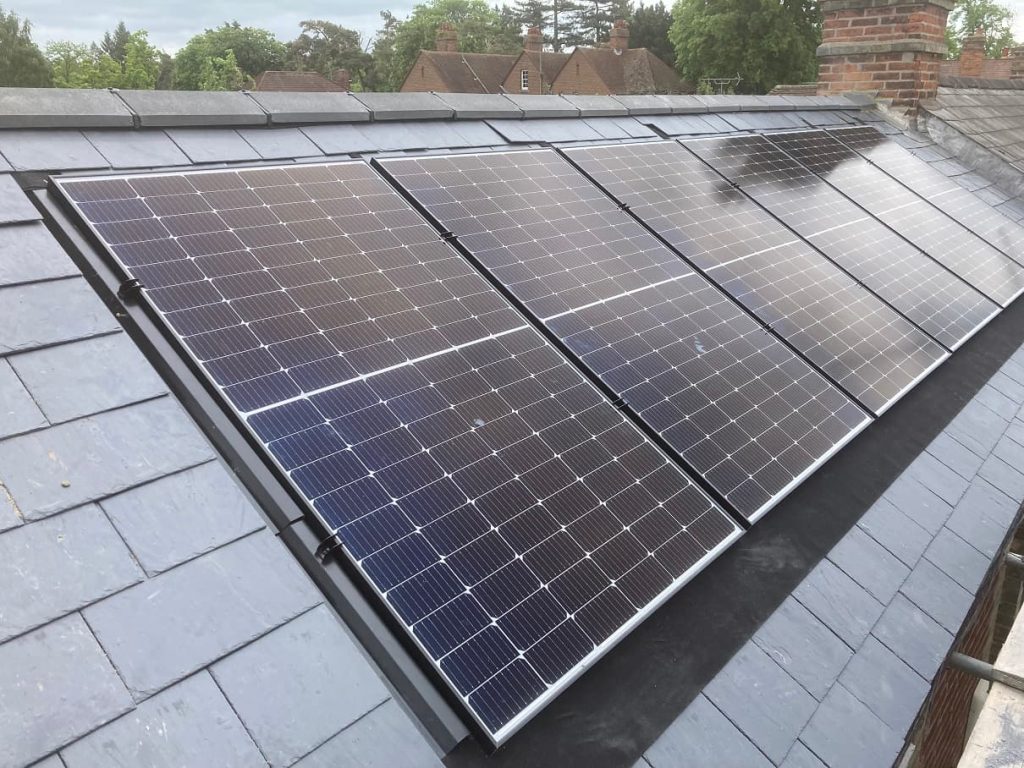
When it comes to determining how many solar panels you need, Tethys Energy offers expert solar system sizing that is tailored to UK homes. We use quality products and guarantee professional installation to maximise your energy savings and efficiency. Our experience and commitment to excellence make us the right choice for your solar panel system needs.
Though every home is unique, determining the right solar panel system size for your UK home is crucial, and that’s where Tethys Energy shines. Our expertise in solar system sizing guarantees a tailored approach, considering your energy needs as well as roof space. We can accurately calculate how many solar panels you will need to maximise efficiency and reduce your bills.
- Comprehensive assessments: We evaluate your energy needs and available roof space
- Precision sizing: We calculate the exact solar system size for your home, considering both panel capacity and optimal roof space utilization
- Expert guidance: We assist you from assessment to installation
- Monocrystalline options: We offer high-efficiency panels for maximum output
Get the Right Number of Solar Panels for Your UK Home
Determining how many solar panels you need for your UK home is a personalised journey that benefits from a professional touch. A professional installer can guarantee your solar panel system is ideally sized to match your energy needs.
Correctly sized systems maximise energy production and savings, offering long-term benefits. Tethys Energy is committed to providing accurate sizing and quality installation, guaranteeing your investment pays off.
We encourage you to take the first step towards solar energy by contacting us now. Get a free, no-obligation quote today and let our experts guide you in making the right choice for your home.