
Solar Panels as a Roof: Can Your Entire Roof Generate Power?
Most homeowners think of solar panels as something added to a roof. But what if the roof itself could be the solar installation? Using solar panels as a roof through in-roof systems, solar roof tiles, or building-integrated photovoltaics is no longer futuristic. It’s an increasingly accessible option for UK homeowners, particularly those planning a roof replacement or building new. This article covers how integrated solar roof systems work, how they compare to standard panels, what they cost, and whether this approach is right for your property.
Key Takeaways
- Solar panels as a roof means integrating solar generation into the roof structure itself through in-roof solar panels, solar roof tiles, or building-integrated photovoltaics
- In-roof solar panels sit flush within the roof plane and are typically 5-10% less efficient than on-roof panels but offer a cleaner appearance
- Solar roof tiles can last up to 40 years and produce around 80% of the electricity of standard panels, making them compelling when roof replacement is planned
- A typical 4kWp system needs around 26m² of roof space; south-facing roofs at 30-40° deliver maximum output
- Tethys Energy has over 10 years of experience delivering solar installations across Reading, Wokingham, and Berkshire, with in-house expertise spanning nearly 20 years
What Does It Mean to Use Solar Panels as a Roof?

Using solar panels as a roof means installing a solar PV system that replaces or integrates with the roof covering itself, rather than mounting standard panels on top of existing tiles using a mounting system. There are three main approaches:
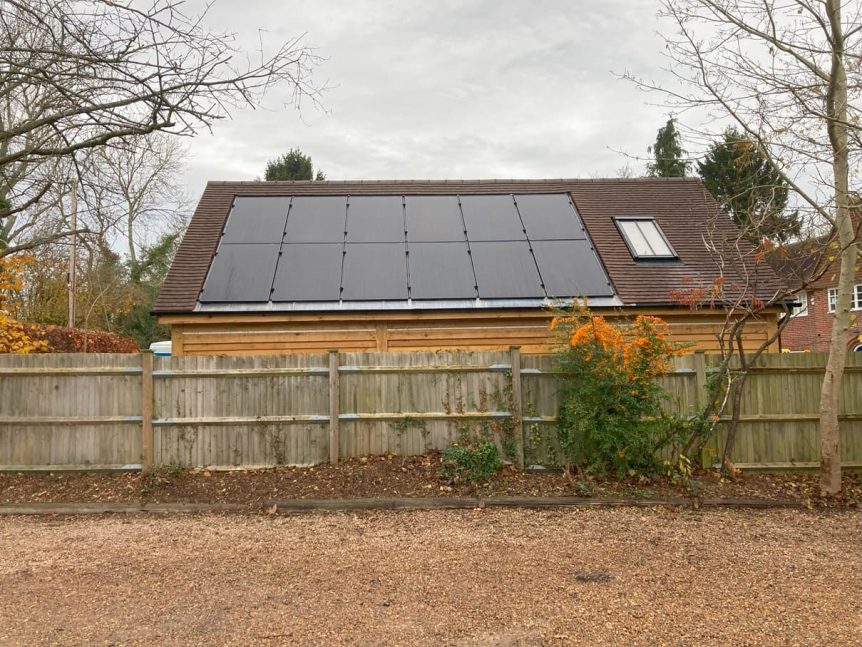
- In-roof solar panels: Panels installed within the roof plane, replacing existing tiles in the installation area and sitting flush with the surrounding roof covering. They typically carry a 15-year warranty and are 5-10% less efficient than on-roof panels due to reduced ventilation beneath them.
- Solar roof tiles: Individual tile-sized solar generating units that replace conventional roof tiles across some or all of the roof area. Solar roof tiles produce around 80% of the electricity of standard panels, last up to 40 years, and come with a 25-year warranty. The most well-known example is the Tesla Solar Roof.
- Building integrated photovoltaics (BIPV): Solar glass or laminates used as the structural roof covering itself, typically in new builds or significant roof replacements. The generating surface is the building material, offering seamless aesthetic integration.
The key distinction from conventional on-roof solar is that integrated systems are part of the roof, not added to it. This changes the aesthetics, structural considerations, installation process, and, in some cases, the planning position. Proper installation is crucial, unlike standard panels, integrated systems must function as effective weatherproofing as well as solar generators, making installer competence and watertight seals essential.
How Integrated Solar Roof Systems Work
The electricity generation process in integrated solar systems is identical to conventional solar panels. The photovoltaic effect converts sunlight into direct current (DC) electricity regardless of whether the panel is mounted above tiles or flush within the roof structure. That DC electricity passes through a solar inverter to become AC electricity suitable for household use. Battery storage can be added to any integrated system to store surplus electricity for evening use.
For in-roof solar panels, existing roof tiles are removed in the installation area, and a purpose-built frame is fixed to the roof battens. Panels install within this frame, flush with surrounding tiles, with flashing providing the watertight seal. For solar roof tiles, individual tiles replace conventional roof tiles, with wiring connecting them to form a solar array.
Roof orientation, pitch, and shading affect output identically to standard panels: south-facing roofs at 30-40° deliver maximum generation, while north-facing roofs are generally not suitable. Portrait or landscape orientation is determined by roof geometry, available space, and the position of dormers or other roof features.
Solar Roof Panels vs. Traditional Rooftop Solar
Understanding the practical differences between integrated systems and standard on-roof solar helps you choose the right approach.
Aesthetics and Performance
The most significant advantage of integrated solar roofing is visual. Traditional on-roof solar panels are raised above the roof surface on mounting systems, clearly visible from the street. In-roof panels and solar tiles sit flush with or replace the surrounding roof covering entirely, creating a far cleaner roofline.
A typical 500W solar panel measures around 1.8m by 1m and weighs approximately 20kg. A 10-panel installation adds around 200kg and requires approximately 26m² of roof space. In-roof systems typically impose lower structural loading because they replace existing roof covering rather than adding to it. The trade-off is ventilation: standard on-roof panels have an air gap beneath them helping regulate operating temperature. In-roof systems are flush with the roof surface, which can marginally affect efficiency in very hot conditions, though the impact on UK performance is generally modest.
Cost and Practical Considerations
In-roof solar and solar roof tiles carry higher installation costs than equivalent standard panels. This is partly offset when installation coincides with a necessary roof replacement; the solar system replaces the cost of conventional new roof materials, reducing net additional spend.
Standard on-roof solar can be added to any structurally sound existing roof with appropriate orientation, making it the more cost-effective choice for most retrofit situations. In-roof systems are most economically justified when a new roof is already planned. BIPV is primarily suited to new builds, where the roof structure can be designed from the outset to accommodate it. For properties with a sound existing roof and significant remaining life, the additional cost of removing tiles to install an integrated system is rarely justified by aesthetics alone.
Can an Entire Roof Generate Enough Electricity?
In principle, all south-facing roof area and a proportion of east and west-facing areas can be covered with panels or tiles. For a typical UK semi-detached property, a fully utilised south-facing roof might accommodate a system of 4 to 6 kWp. A 4kWp system needs around 20m² of roof space.
Not every roof section will be usable. Dormer windows, chimneys, roof lights, and heavily shaded sections reduce available solar area. A professional site survey models expected generation against household energy consumption, giving a realistic picture of annual electricity production. For most UK households, a maximised roof installation combined with battery storage can meet a substantial proportion of annual electricity demand, reducing grid dependence significantly.
Is a Solar Roof the Right Choice for Your Property?
Integrated solar roofing isn’t the right choice for every property. Understanding where it makes most sense helps you make an informed decision.
Integrated solar roofing makes most sense for:
- Properties where the roof needs replacing in the near future
- New builds where systems can be incorporated from the design stage
- Properties in conservation areas where raised panels may face planning difficulties
- Properties where standard mounted panels cannot be supported structurally
Standard on-roof solar is typically better for:
- Properties with a structurally sound existing roof with significant remaining life
- Retrofit projects where installation costs are a primary concern
- Properties where planning permission isn’t an issue
- Situations where maximum panel efficiency is prioritised
Why Choose Tethys Energy for Your Solar Roof Installation

Tethys Energy is a trusted solar installation specialist with over a decade of experience delivering high-quality solar installations across Berkshire and the South East, with in-house expertise spanning nearly 20 years. We are MCS certified, we use our own fully qualified teams with no subcontract labour, and we cover the full range of solar solutions: standard on-roof panels, in-roof solar systems, battery storage, Tesla Powerwalls, and other renewable energy technologies as part of a complete home energy package.
Every engagement begins with a thorough site survey assessing the roof structure, orientation, available space, shading, and the homeowner’s energy goals. We provide honest, property-specific advice on whether integrated solar roofing is the right choice or whether standard panels would deliver a better outcome based on a proper assessment, not a sales preference. Transparent pricing, no hidden fees, and a workmanship guarantee on every installation. Contact us today for a free site survey and expert guidance on the right solar solution for your property.
Making the Right Choice for Your Roof
Using solar panels as a roof through in-roof systems, solar tiles, or building-integrated photovoltaics is a genuinely viable option for UK homeowners. It’s most compelling when combined with a planned roof replacement or new build, when aesthetics or planning considerations make conventional panels less suitable, or when the goal is seamless integration of solar generation into the building.
For most retrofit situations with a sound existing roof, standard on-roof solar remains the more cost-effective solution. The practical question is always which approach is most appropriate for your specific property, and a professional site survey is the only reliable way to answer it.
Contact Tethys Energy to discuss your property and book a free survey. We’ll assess your roof, explain your options honestly, and help you choose the solar solution that delivers the best long-term value for your home.