
Roof PV Panels: The Benefits of Integrated In-Roof Solar Systems
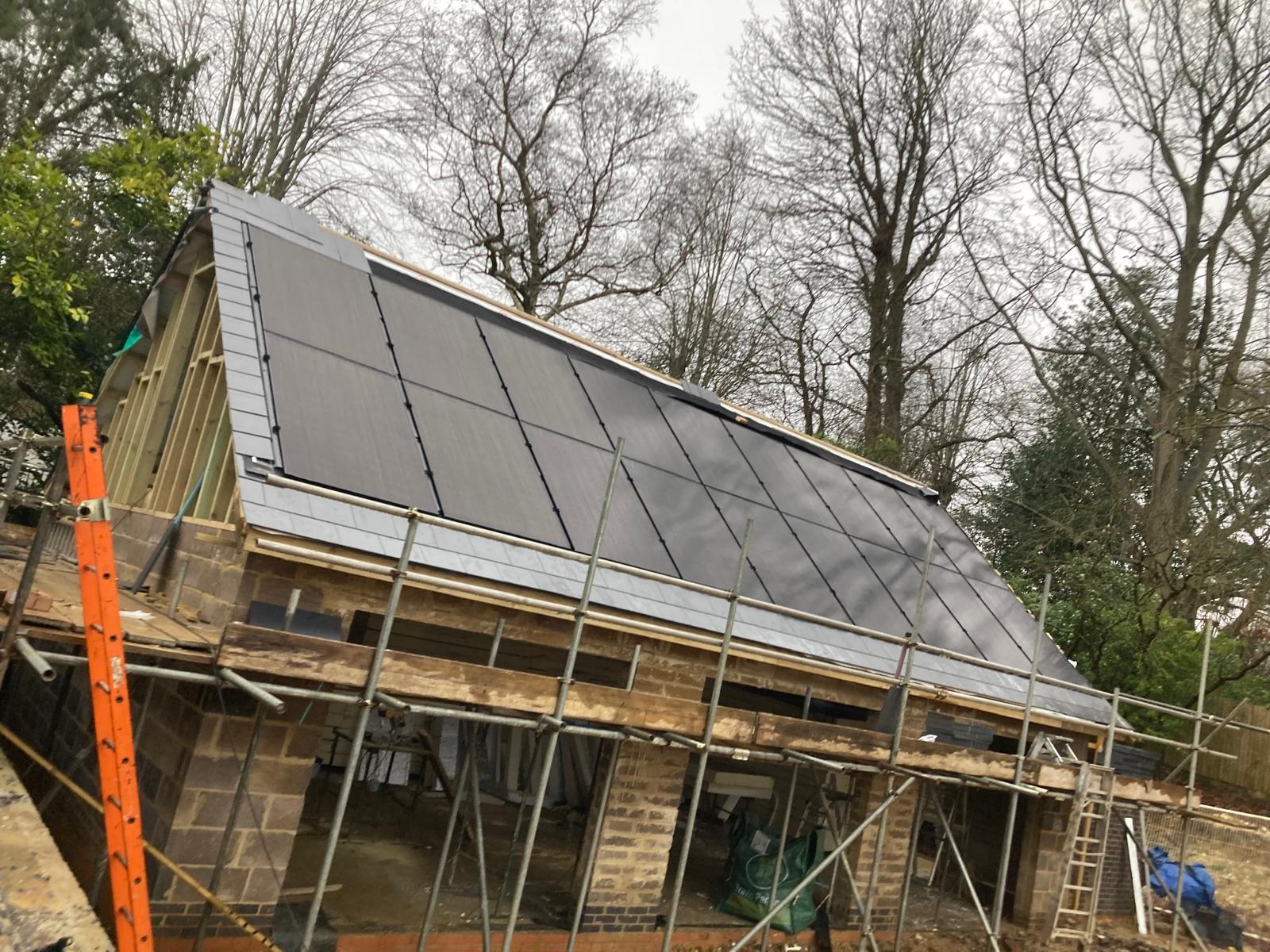
Conventional solar panels are mounted on top of a roof. In-roof solar panels are integrated within the roof itself, replacing the roof covering in the installation area and sitting flush with the surrounding tiles. But the decision about which type of roof PV panel is right for your property goes beyond aesthetics; it involves roof structure, planning position, energy yield, installation costs, and timing. This article covers how roof PV panels work, the main system types available, the key benefits of integrated in-roof solar, flat roof considerations, and how to choose the right solution for your property.
Key Takeaways
- Roof PV panels, whether in-roof, on-roof, or flat roof solar, generate clean electricity using the photovoltaic effect, converting the sun’s energy directly into usable power for your home.
- In-roof solar panels sit flush with the surrounding roof covering, offering a cleaner appearance and lower structural loading than conventional raised panels.
- Flat roof solar panels are typically mounted at 10 degrees facing due south or in an east/west configuration. Each kWp installed generates around 890 kWh annually.
- Solar panels perform best at 30 to 40 degrees facing due south, but east/west systems can outperform south-facing systems in terms of output per square metre of roof area.
- Tethys Energy has over 10 years of experience installing pitched roof and flat roof solar PV systems across Reading, Wokingham, and Berkshire, with in-house expertise spanning nearly 20 years.
How Roof PV Panels Work
All roof PV panels, whether in-roof, on-roof, or flat roof solar panels, generate electricity through the same process. Photovoltaic panels are made up of photovoltaic cells manufactured from semiconductor materials, most commonly silicon. The photovoltaic effect occurs when photons from sunlight knock electrons loose within these cells, creating an electrical charge and causing direct current (DC) electricity to flow. This direct current passes through a solar inverter, which converts it into alternating current (AC) suitable for household appliances. Any excess electricity generated can be stored in a solar battery for later use or exported to the grid via the Smart Export Guarantee.
Solar panels generate electricity even on overcast days, responding to available daylight rather than direct sunlight alone. The amount of energy generation depends on roof orientation, tilt angle, shading, panel efficiency, and system size. Panels facing due south at a roof pitch of 30 to 40 degrees produce maximum output; this is the most efficient angle for UK properties. Inverters typically need replacement after around 12 years, while the solar panels themselves last 25 years or more.
Types of Roof PV Panel Systems
The main roof PV system types for UK homeowners are:
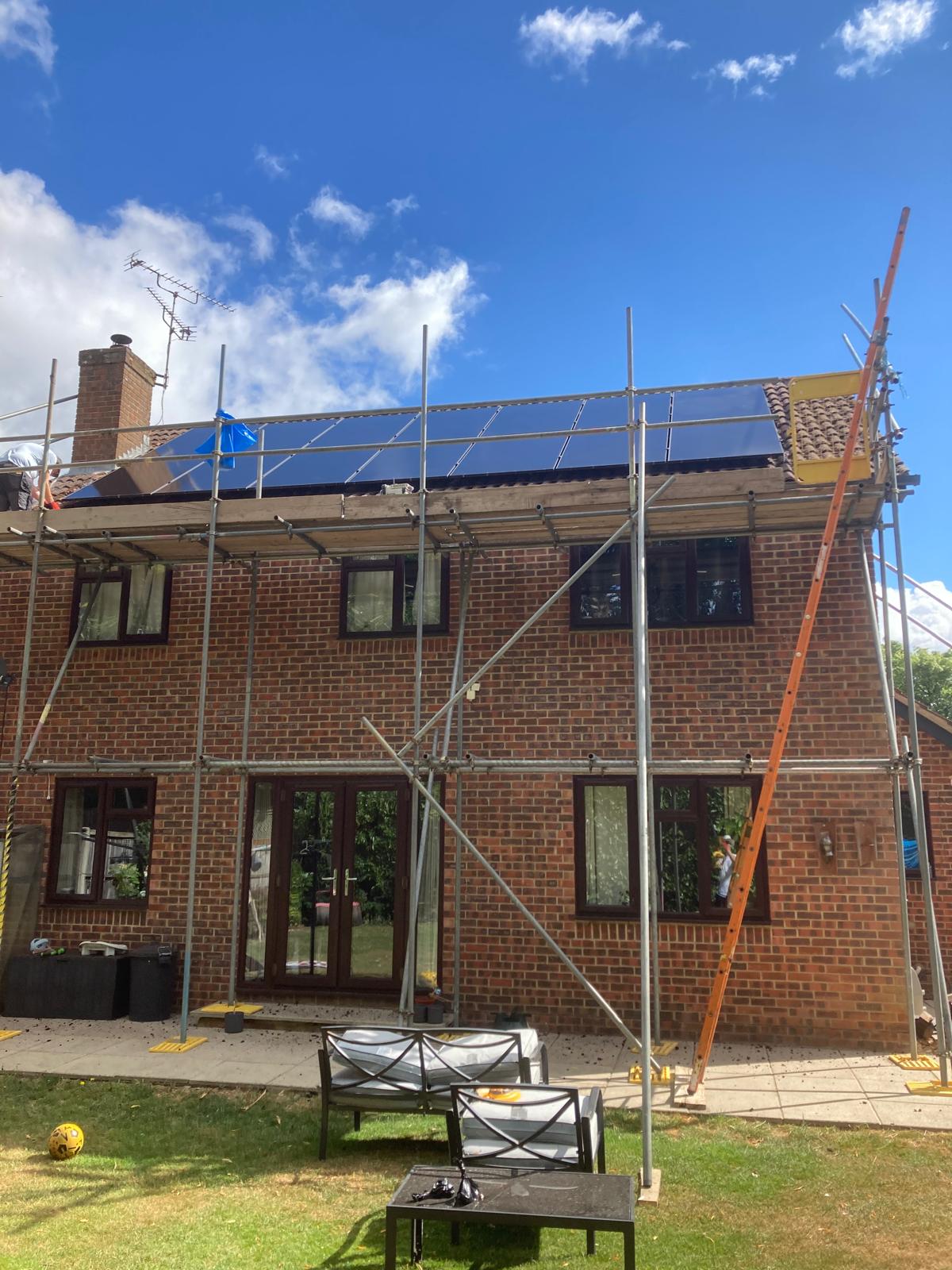
- On-roof solar panels: the most common solar installation type. Photovoltaic panels are mounted above the existing roof covering using mounting systems fixed to the roof structure, raised above the traditional tiles with a ventilation gap beneath.
- In-roof solar panels: panels installed within the roof plane itself, replacing the roof covering in the installation area and sitting flush with the surrounding tiles. The solar panel system performs dual duty as both an electricity generator and weatherproof roof covering.
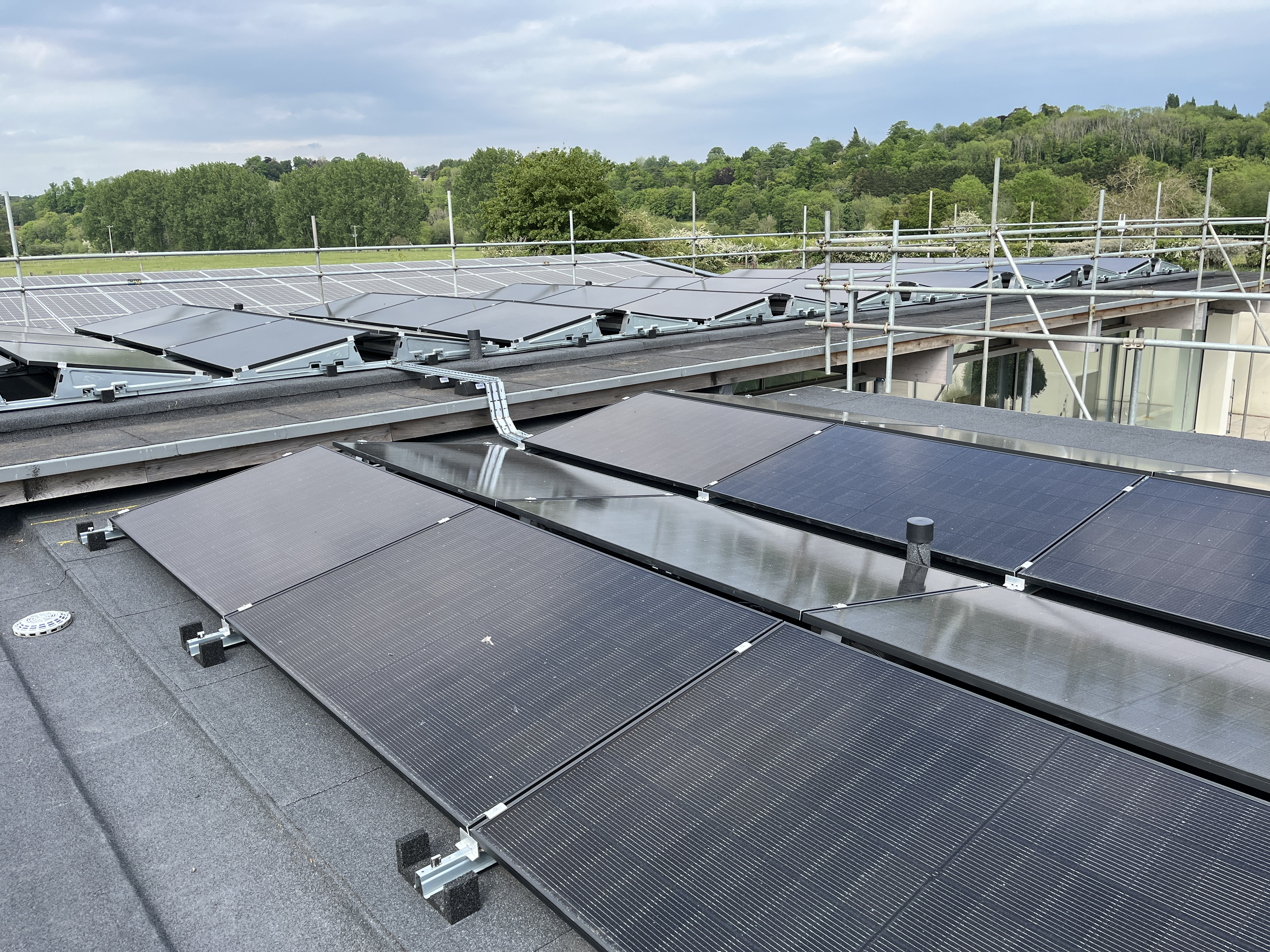
- Flat roof solar panels: pitched roof solar panels are not the only option. Flat roof installations use angled mounting frames or ballasted systems to achieve the correct tilt angle for solar generation without penetrating the roof surface, reducing roof leakage risk.
- Ground-mounted solar: free-standing frames on open ground, suited to properties with available land and limited suitable roof space.
Battery storage can be integrated with any of these system types, and EV chargers can be added as part of a complete home energy package.
In-Roof Solar Panels: Key Benefits
For the right property, integrated in-roof solar panels offer a set of advantages that conventional on-roof systems cannot match. Here are the primary benefits.
Aesthetic Integration, Dual Function, and Planning Advantages
The most significant practical advantage of in-roof solar is visual. On-roof panels sit above the roof surface on mounting systems and are clearly visible from the street. In-roof panels sit flush within the roof plane, creating a far cleaner roofline. This matters for homeowners who find the appearance of raised panels a barrier, and it can also make a meaningful difference to the planning position. Properties in conservation areas or other planning-sensitive locations may find integrated in-roof systems more readily accepted by the local planning authority than conventional raised panels. In-roof solar also performs a dual function: it generates electricity from the sun’s energy while simultaneously serving as the weatherproof roof covering in the installation area. When a roof replacement is already planned, this means the solar system partially replaces the cost of conventional re-roofing rather than being a pure additional expense.
Structural Loading, Wind Resistance, and Energy Bill Savings
In-roof systems typically impose lower structural loading on the roof structure than on-roof systems of equivalent output, because they replace the existing roof covering rather than adding weight on top of it. Flush-mounted in-roof panels also present a lower wind uplift profile than raised on-roof systems, a relevant consideration for exposed properties. In common with all solar PV systems, in-roof PV panels reduce energy bills by generating clean electricity directly from sunlight, cut carbon emissions and carbon footprint, and reduce dependence on grid electricity. Each kWp of solar capacity installed can save approximately £240 per year on energy bills, with a typical payback period of seven to ten years for a well-designed system.
Flat Roof Solar Panels: A Practical Alternative
Pitched roof solar panels are not the only option for homeowners and businesses. Flat roofs offer a genuinely practical installation environment in many ways. Installing solar panels on a flat roof is more straightforward than on a sloped roof, with easier access and greater flexibility in panel positioning. Flat roof solar panels are mounted on angled frames to achieve the correct tilt angle for energy generation. A 10-degree tilt is standard for flat roof installations, facing due south where roof space allows. This angle is sufficient for rain to clean the panels naturally and delivers strong annual energy yield.
East/west mounting configurations are an effective alternative for flat roofs with limited south-facing space. East/west systems spread generation across a longer period of the day and can outperform south-facing systems in terms of total output per square metre of roof area. Ballasted mounting systems are widely used on flat roofs; these avoid roof penetration entirely, significantly reducing the risk of roof leakage. South-facing mounts require more ballast than east/west configurations. A flat roof solar system costs around £750 to £900 per kWp installed, with each kWp generating approximately 890 kWh annually.
When In-Roof Solar Makes the Most Sense
In-roof solar panels are not the right choice for every property. They are most compelling in specific circumstances:
- Roof replacement timing: the most cost-effective scenario for in-roof solar is when a roof replacement is already planned. The incremental cost of choosing in-roof solar over conventional replacement tiles is substantially lower than retrofitting in-roof panels to a sound existing roof.
- New builds: new build properties where the roof structure can be designed from the outset to accommodate an in-roof system are the ideal opportunity for seamless solar integration.
- Aesthetics or planning restrictions: homeowners for whom the visual appearance of raised panels is a concern, or properties where planning permission for on-roof installations would be difficult to obtain, can find in-roof systems a practical route to solar generation.
- Structural considerations: properties where a structural assessment raises concerns about added weight from on-roof mounting systems may find in-roof systems a more suitable alternative.
For properties with a structurally sound roof with significant remaining life, where roof orientation and shading are acceptable for on-roof installation, conventional on-roof solar panels remain the most cost-effective solution in most cases.
What to Consider Before Installing Roof PV Panels
Before proceeding with any roof PV system, the following are essential considerations:
- Roof orientation and tilt angle: a professional site survey assesses whether the roof faces due south or close enough to it, the roof pitch relative to the most efficient angle, and the impact of any shading from nearby trees or structures. Trimming nearby trees to minimise shading is often a straightforward way to improve energy yield before installation.
- Roof condition and structure: the roof structure, battens, and rafters must be assessed before any in-roof installation. For flat roof systems, the roof surface and waterproofing layer must also be in sound condition.
- Planning position and building regulations: most residential solar installations fall within permitted development rights and do not require planning permission. Exceptions apply in conservation areas and other sensitive locations. Solar PV is notifiable electrical work under building regulations and must be carried out by a registered competent person; an MCS-certified solar panel installer handles this as standard.
- Funding options: there is no dedicated in-roof solar grant from the UK government, but VAT relief applies to residential solar installations and the Smart Export Guarantee pays homeowners for surplus electricity exported to the grid. The Warm Homes Plan may provide additional funding routes for eligible homeowners.
- Battery storage: integrating a solar battery at the time of initial installation is more cost-effective than adding one later. Battery storage improves self-consumption of generated electricity and is fully compatible with all roof PV system types.
Why Choose Tethys Energy for Your Roof PV Installation
Tethys Energy is an MCS-certified solar panel installer with over 10 years of experience delivering pitched roof, in-roof, and flat roof solar PV systems across Reading, Wokingham, and Berkshire, with in-house expertise spanning nearly 20 years. We use our own fully qualified installation teams with no subcontract labour and manage every stage from initial site survey through to commissioning and long-term aftercare.
We cover the full range of renewable energy solutions: in-roof and on-roof solar panels, flat roof solar systems, solar battery storage, Tesla Powerwalls, hot water storage, and EV chargers as part of a complete home energy package. Every system is designed around the specific property roof structure, orientation, tilt angle, available space, and energy needs, with transparent pricing, no hidden fees, and a workmanship guarantee on every installation. Contact us today for a free site survey and an honest assessment of the best roof PV solution for your property.
Your Roof Has Hidden Potential
Whether your roof faces south or you’re working with unconventional angles, whether you’re planning a full roof replacement or adding solar to your existing home, there’s a roof PV solution that makes sense for your property. The choice between in-roof, on-roof, and flat roof systems isn’t just about aesthetics or cost; it’s about maximising the long-term value of your investment while minimising disruption to your home.
In-roof systems offer seamless integration when timing aligns with roof replacement plans. Conventional on-roof panels deliver maximum cost-effectiveness for most retrofit properties. Flat roof installations provide practical flexibility. The key is matching the right system to your specific circumstances.
Let Tethys Energy assess your property’s potential. A professional site survey takes just an hour and reveals exactly which roof PV solution will deliver the best long-term return for your home. Book your free survey today and discover how much your roof could be earning you.